Highlights:
- A single flickering bulb is usually a bulb, socket, or dimmer problem, but flicker across several rooms, or flicker that follows a pattern, points to the wiring or the circuit.
- Flickering becomes a red flag when it comes with a burning smell, buzzing or sizzling sounds, warm switch plates, scorch marks, or breakers that keep tripping. Any of these means you should stop using that circuit and call a licensed electrician.
- NFPA’s April 2026 report found about 46,652 home electrical fires a year from 2020 to 2024, with roughly 527 deaths. About 64 percent of those fires were started by arcing, which is the same kind of loose or damaged connection that can make lights flicker.
- Overnight electrical fires are the deadliest. About half of the deaths happened between midnight and 8 a.m., so don’t leave a suspicious circuit powered while you sleep.
- CPSC’s 2026 estimates show that installed wiring is the biggest source of residential electrical distribution fires, at about 8,100 a year. Outlets, switches, and lighting follow, so the hidden connections behind a light are often a bigger concern than the bulb itself.
- Simple checks come first: tighten the bulb, swap in a known-good LED, confirm the dimmer is LED-compatible, and note when the flicker happens. If none of that helps, or you find heat or odor, hand it to a professional.
- Upgrades such as arc-fault protection, LED-rated dimmers, and replacing worn outlets or switches can cut your risk, and a quick service call costs far less than the damage from a fire.
You flip the switch, and the light in your hallway does that little stutter again. Most of us shrug it off, tighten the bulb, and move on with our evening. Sometimes that is exactly the right call. A cheap bulb or an incompatible dimmer can make an LED twitch for years without causing any harm.
But flickering is also one of the few things your home can do to tell you something is wrong inside the walls. LED bulbs sip power and rarely fail in dramatic ways, so when one flickers, the bulb is not always the culprit. The wiring, the switch, or the circuit behind it might be struggling. This guide breaks down what is normal, what is not, and what two fresh 2026 data sets say about why electrical problems deserve your attention.
Why Do LED Lights Flicker in the First Place?
LED bulbs are not like the old incandescent ones. Inside every LED is a small electronic driver that converts your home’s alternating current into the steady low-voltage direct current the diodes need. When something disrupts that process, the light output wobbles, and you see flicker.
Here are the most common causes, roughly from least to most worrying:
- A loose bulb. If the bulb is not seated firmly in the socket, the connection can break and remake itself many times a second.
- Dimmer incompatibility. Many older dimmers were built for hot, power-hungry bulbs. They struggle to regulate the tiny load an LED draws, which causes buzzing, strobing, or dimming that never gets fully smooth.
- A low-quality driver. Budget bulbs often use bargain components that cannot smooth out power fluctuations. These bulbs tend to flicker more as they age.
- Voltage fluctuations. Large appliances such as air conditioners, dryers, and well pumps can briefly pull down the voltage when they start up. LEDs are sensitive enough to show it.
- Loose or deteriorating connections. A wire nut that has worked itself loose, a worn switch, or a corroded outlet can interrupt current in tiny bursts.
- Overloaded or aging circuits. Too many devices on one circuit, or wiring that was never designed for modern loads, can cause instability that shows up first in your lighting.
The first few items are annoying but usually harmless. The last three are where flickering stops being a lighting problem and becomes an electrical one.
When Flickering Is Harmless and When It Is Not
A single flickering bulb in a single fixture is usually a bulb problem. Swap it for a quality LED rated for your dimmer, and if the flicker disappears, you have your answer. The same goes for a flicker that happens only when you dim the light to its lowest setting, which is a well-known limitation of many dimmer and bulb pairings.
The picture changes when the flicker follows a pattern that points away from the bulb. Be suspicious if you notice any of the following:
- The flicker continues after you replace the bulb with a different, known-good one.
- Several lights in different rooms flicker at the same time.
- The flicker is tied to a specific event, like the microwave turning on or the furnace kicking in.
- The flicker comes with sounds, smells, or heat.
- The flicker is getting worse over weeks rather than staying the same.
Here is a simple rule of thumb. One bulb, one fixture, no other symptoms? Probably the bulb. Multiple fixtures, a repeating pattern, or any sign of heat or odor? Treat it as an electrical issue until a professional says otherwise.
One more note on the human side of this. Even when flicker is electrically harmless, some people find it genuinely uncomfortable. Rapid, subtle flicker can contribute to eye strain and headaches in sensitive individuals. If your lights make you feel off, that alone is a good reason to fix the problem.
What the 2026 NFPA Data Says About Home Electrical Fires
To understand why a flickering light can matter, it helps to look at the bigger picture of what electrical problems do in American homes. The National Fire Protection Association (NFPA) published an updated report on home electrical fires in April 2026, covering the years 2020 through 2024. You can find it on the NFPA Home Electrical Fires page.
Here are the headline numbers, as summarized by the EngiMarket 2026 electrical fire statistics roundup:
- Fire departments responded to about 46,652 home electrical fires per year on average.
- Those fires killed roughly 527 people a year and injured about 1,580.
- Direct property damage averaged around $2.4 billion annually.
- About 64 percent of these fires were started by arcing.
- Roughly 52 percent of the deaths happened between midnight and 8 a.m., even though only about 22 percent of the fires occurred in that window.
Let’s unpack why this matters to a homeowner staring at a twitchy light fixture.
Arcing is the key idea. An arc happens when electricity jumps across a gap, such as a frayed wire, a loose terminal, or a damaged cord. That jump generates intense, localized heat, enough to ignite the wire’s own insulation or the wood framing behind it. The same kind of loose or damaged connection that creates an arc can also interrupt current in small bursts. Those bursts are what your eyes read as flicker. Flickering does not prove an arc is happening, but it is the kind of symptom a loose connection can produce.
The timing figures are the sobering part. Roughly half of the deaths came from fires that started overnight, which tells us these fires often grow quietly in attics, walls, and ceilings while people sleep. The report also notes that a significant share of home electrical fires begin in concealed structural areas, where nobody can see them developing. That is exactly why early warning signs, including odd behavior from your lights, deserve a second look.
A fair caveat: this data covers home electrical fires broadly. It does not isolate LED flicker as a cause, and it would be inaccurate to say flickering LEDs lead directly to fires. The takeaway is that electrical faults are a serious, persistent risk, and visible symptoms are the cheapest early warning you will get.
What the 2026 CPSC Estimates Reveal About Wiring and Lighting
The second data set comes from a different type of source. The U.S. Consumer Product Safety Commission (CPSC) released its residential fire loss estimates for 2020 through 2022 in April 2026. You can read the full document in the CPSC residential fire loss report.
Where the NFPA figures cast a wide net, the CPSC breaks down what kind of electrical equipment is involved. As reported by EngiMarket’s summary, the agency estimated that electrical distribution equipment was involved in about 18,100 residential fires a year, which is roughly 5 percent of all residential fires. Within that group:
- Installed wiring accounted for about 8,100 fires a year, the largest single category.
- Outlets and switches accounted for about 2,500.
- Lighting accounted for about 1,900.
- Cords and plugs accounted for about 1,700.
Fires tied to installed wiring alone were linked to around 60 deaths and 210 injuries annually. The trend line matters too. Residential fires involving electrical distribution equipment climbed from about 16,600 in 2020 to 19,700 in 2022, and the associated property losses rose from about $594 million to about $805 million over the same stretch, an increase of roughly 35 percent.
What stands out here is the ranking. Nearly half of the fires in this category started in the wiring hidden behind your walls, not in the visible fixtures. Lighting itself was a smaller slice. That tells us something useful: when a light flickers, the bulb or fixture is less likely to be the dangerous part than the connections feeding it.
Putting the Two Data Sets Together
Neither source says “flickering LEDs cause fires,” and it is worth being honest about that. But read side by side, the two reports paint a coherent picture that homeowners can act on.
The NFPA data tells us that arcing is the dominant mechanism behind home electrical fires and that the damage tends to peak when nobody is awake to notice. The CPSC data tells us where the trouble most often starts: in the wiring system itself, followed by outlets and switches, with lighting playing a smaller role.
Combine those two facts and a practical conclusion falls out. Your lights are often the most visible part of an electrical system that is mostly hidden. A flicker is one of the few moments when that hidden system gives you a clue. If the problem is isolated to one cheap bulb, great. If the problem is systemic, you may be seeing a symptom of the same kinds of faults that show up in these fire statistics.
There is also a financial angle. Both data sets point to rising electrical fire losses in recent years. Catching a loose connection early typically costs a service call. Catching it late can cost a home.
Warning Signs Homeowners Should Never Ignore
Flickering becomes a real red flag when it travels with other symptoms. Treat any of the following as a reason to stop using the affected circuit and call a licensed electrician:
- A burning or hot-plastic smell near a switch, outlet, fixture, or the breaker panel. Never dismiss this one.
- Buzzing, crackling, or sizzling sounds from walls, switches, or fixtures. Some mild dimmer hum is normal, but sizzling is not.
- Warm or hot switch plates and outlet covers. They should feel room temperature.
- Discoloration or scorch marks on outlets, switch plates, or the wall around a fixture.
- Breakers that trip repeatedly or fuses that blow without an obvious cause.
- Lights that dim whenever a large appliance starts, especially if the dimming is dramatic or affects the whole house.
- Flickering across multiple rooms that continues after you swap in new bulbs.
- Mild tingling or shocks when touching a switch, fixture, or appliance.
- Outlets or switches that feel loose, crumble, or make a crackle when you use them.
Any single item on this list is worth taking seriously. Two or more together should move to the top of your to-do list. Because the NFPA figures show overnight fires are the deadliest, do not leave a suspicious circuit powered while you sleep.
Quick Checks You Can Safely Do Yourself
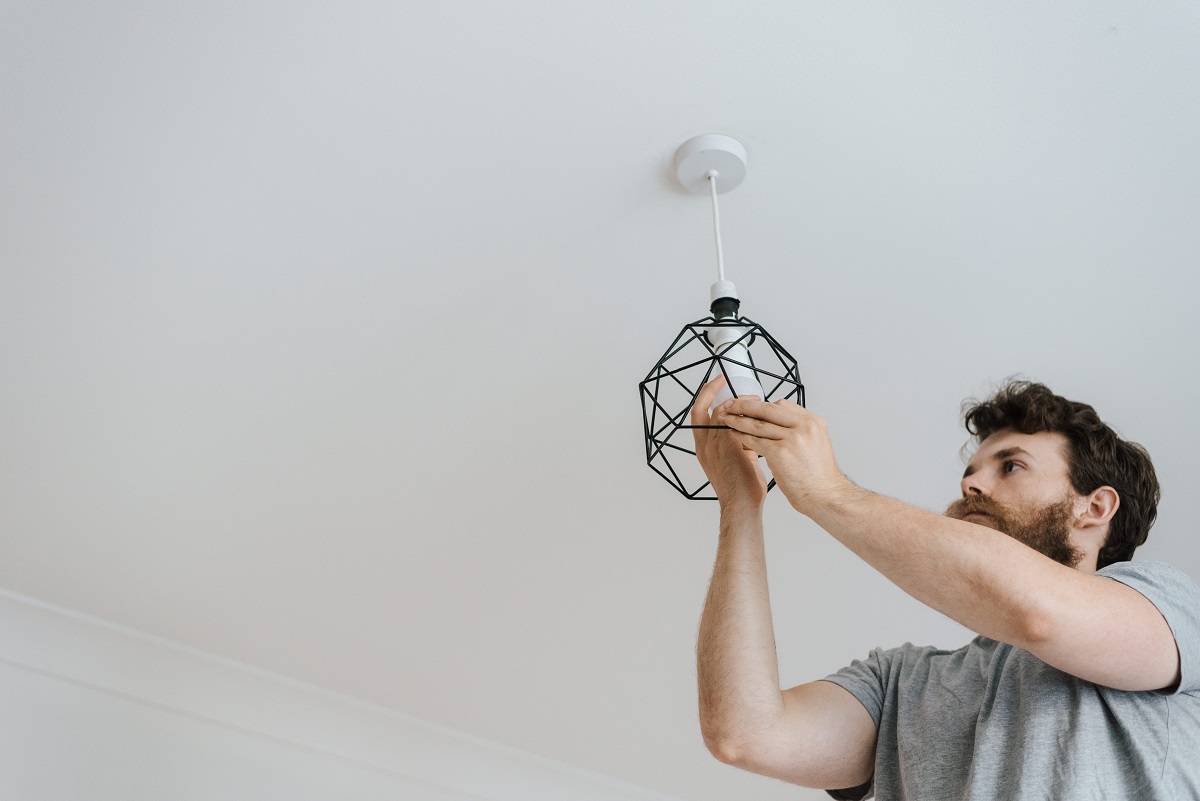
Before you call in a pro, there are a few low-risk steps worth trying. These are for diagnosis only, and none of them involve opening walls, panels, or fixtures.
- Turn the light off and let the bulb cool, then tighten it gently until it is snug. Do not overtighten.
- Swap in a different bulb, ideally a reputable LED labeled as dimmable if the fixture is on a dimmer. Try a bulb from a fixture that works fine as a comparison.
- Check the dimmer compatibility. Look at the dimmer’s packaging or model number for a list of compatible LED bulbs. Many modern dimmers are built specifically for LEDs.
- Note when it happens. Write down whether the flicker coincides with appliances starting, certain times of day, or specific weather. That information is gold for an electrician.
- Test the same bulb elsewhere. If it flickers in a different fixture too, the bulb is the problem. If it behaves normally elsewhere, the original fixture or circuit is the suspect.
- Feel the switch plate and outlet covers with the back of your hand for unusual warmth.
If none of this fixes the flicker, or if you discover heat, odor, or discoloration along the way, stop and make the call. This is not the kind of project to tackle with a screwdriver and a video tutorial.
When to Call a Licensed Electrician
Hire a professional if the flicker persists across several fixtures, if you notice any of the warning signs listed above, or if your home is older and has never had its wiring evaluated. Houses with aluminum branch wiring, ungrounded outlets, outdated panels, or wiring that predates modern codes deserve extra scrutiny.
A good electrician will do more than glance at the light. Expect them to check voltage at the affected circuits, inspect connections at switches and outlets, look for signs of heat damage, and examine the panel for loose terminals or worn breakers. Loose neutral connections, in particular, are a classic cause of flickering lights and are not something a homeowner can or should fix alone.
Some practical tips for getting the most from the visit:
- Describe the pattern, not just the symptom. “It flickers when the dryer starts” is far more useful than “my lights are weird.”
- Ask whether the home has arc-fault protection and whether adding it makes sense.
- Ask for any issues to be documented in writing so you have a record for future repairs or home sales.
- If your area requires permits for electrical work, make sure the contractor handles them.
It is also fine to ask what the fix will cost before work starts. Many flickering problems turn out to be inexpensive, like a replaced switch or a re-tightened connection.
Smart Upgrades That Reduce Risk and Lower Bills
Once you have dealt with an immediate problem, it is worth thinking about the bigger picture. Flickering lights are often a nudge that your electrical system is due for some attention. Treating the repair as part of a broader plan, such as improving home efficiency with practical upgrades, can make the money you spend do double duty: safer wiring now, and lower energy costs later.
Here are upgrades that commonly make sense:
- Arc-fault circuit interrupters (AFCIs). These breakers or outlets detect dangerous arcing patterns and cut power before heat builds up. Since arcing drives most home electrical fires, this is one of the most direct protections available, and homes built before they became standard rarely have them everywhere.
- Modern LED-rated dimmers. Matching your dimmers to your bulbs eliminates a huge share of nuisance flicker and buzzing.
- Panel evaluation or replacement. Older panels and worn breakers can be a hidden weak link. An inspection tells you whether yours is up to the demands of modern appliances.
- Dedicated circuits for heavy appliances. Keeping big loads off your lighting circuits prevents voltage dips that make lights flicker.
- Replacing worn outlets and switches. Given that the CPSC numbers show outlets and switches are a recurring source of fires, a worn or loose device is not worth saving.
- Quality LED bulbs. Spending a little more on reputable bulbs with better drivers cuts down on flicker and tends to last longer.
- Surge protection. Whole-home or point-of-use protection helps guard sensitive electronics and LED drivers from voltage spikes.
You do not have to do everything at once. Start with whatever your electrician flags as the highest risk, then tackle the rest as your budget allows.
The Bottom Line
So, are flickering LED lights dangerous? Sometimes, and the tricky part is that you cannot tell from the flicker alone. A single twitchy bulb is usually a cheap fix. A pattern of flickering, especially alongside heat, sounds, smells, or tripping breakers, can point to loose connections or failing wiring that you will want to catch before it becomes something worse.
The 2026 data from the NFPA and the CPSC does not single out LED flicker, but it makes a strong case for taking electrical symptoms seriously. Arcing drives the majority of home electrical fires, wiring is the most common starting point, and the deadliest fires tend to unfold overnight. Treat your lights as an early warning system, run through the simple checks, and do not hesitate to bring in a licensed electrician when something does not add up. A short service call is a small price for peace of mind.